The Welcome Table: What a Club Tells You Before Practice Begins
A club arrival routine can reveal whether a group’s instructions are clear, roles are understood and newcomers can take part with confidence.
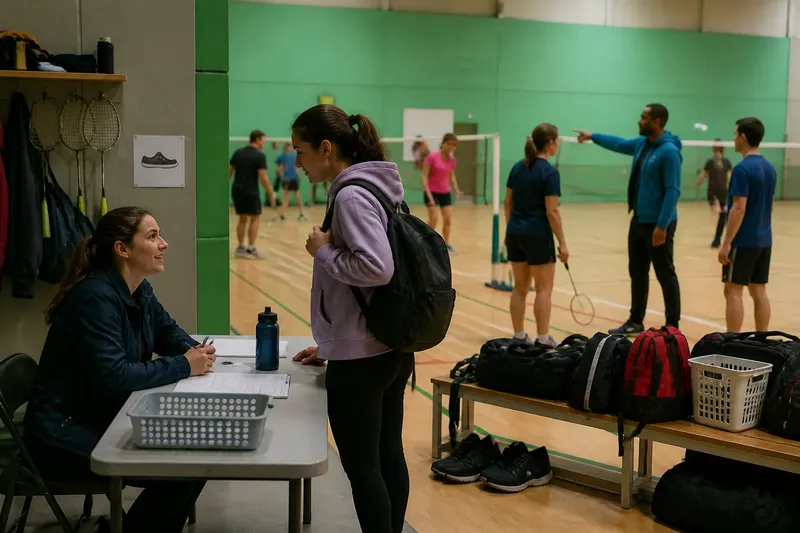
A club arrival routine can reveal more than where to leave your coat. Watch how people share information, handle a change of plan and make room for someone who does not know the routine yet. Those details help you judge whether the session’s organisation suits you.
You do not need to decode every custom at once. Focus on what happens around the welcome table, the equipment and the group’s transitions; those moments show how the club works without turning your first visit into an inspection.
What does the arrival routine tell you about club organisation?
Notice whether people know their roles. One volunteer might manage attendance, while a coach sets up equipment and another player shows visitors where to wait. A clear handoff suggests that tasks are understood, even if the welcome is brief.
Also notice how information travels. Does someone explain a change directly, point to a notice, or rely on regulars to pass it along? None of these methods is automatically right or wrong. The useful question is whether you can understand what to do without already knowing the club’s shorthand.
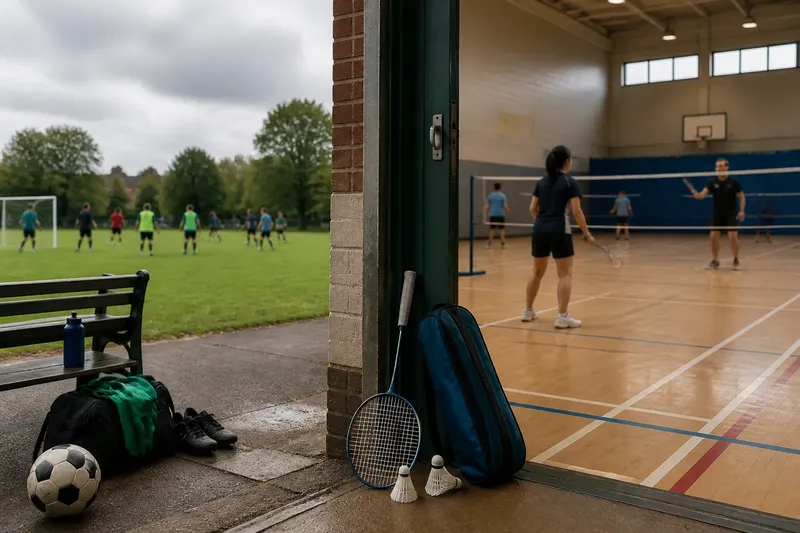
Say you arrive at a community badminton session and see a sign asking players to leave outdoor shoes by the benches. You follow the sign, then hear the coach tell the group that one court is unavailable. If a volunteer points newcomers toward the remaining court and explains where to wait, you can see how the club communicates a practical change.
How can you tell whether instructions are easy to follow?
Listen for plain directions about where to stand, what equipment to use and when the activity changes. A coach may use familiar names for drills, but a quick demonstration or a direct pointer can make the same instruction understandable to someone new.
Look, too, at what happens when somebody misses a cue. If a player checks where the group is moving and receives a calm answer, that offers a glimpse of the club’s everyday communication. If instructions remain unclear, ask one specific question at a pause rather than trying to infer the whole session from the sidelines.
What should you notice before joining an activity?
- Check whether signs identify the room or court; if the location is clear, head there, and if it is missing or contradictory, ask venue staff which group is using the space.
- Check whether the session lead is identifiable; if a coach or named volunteer is available, direct practical questions to them, and if not, ask who is responsible for the activity.
- Check whether the group has a visible waiting place; if players are gathering away from active play, wait there, and if no safe spot is apparent, ask where to stand before crossing the playing area.
- Check whether equipment has a clear home; if balls, rackets or other gear are set out for the session, use only what the lead indicates, and if ownership or use is unclear, leave it in place and ask.
- Check whether a change in activity comes with an understandable cue; if the lead calls or demonstrates the next move, follow that direction, and if the signal is unclear, wait at the edge and request clarification.
- Check whether people can explain what happens after a missed instruction; if someone can point out the next position or group, follow their direction, and if answers conflict, confirm the plan with the session lead.
What can you ask to understand how the session works?
Who leads the activity?
Ask whether the coach, team manager or another volunteer is responsible for the session. Knowing the role gives you a clear person to approach if the plan changes.
Where should I wait before joining?
Ask for a specific place, such as the benches or the edge of a court. That helps you stay out of active play while you wait for direction.
How does the group signal a change?
Ask whether the lead gives a verbal call, demonstrates the next drill or directs players to another area. Knowing the cue can make transitions easier to follow.
What should I do if I miss an instruction?
Ask whether to check with the lead or a nearby player during a pause. A clear answer shows how the group handles small misunderstandings.
How do you judge a confusing moment fairly?
One missed introduction or unclear direction may reflect a busy session, not the club’s usual approach. Notice whether the confusion gets resolved when you ask a focused question. Repeatedly conflicting directions, no clear person in charge or uncertainty about where to wait are more useful signals to consider before returning.
For example, imagine you visit a beginner-friendly volleyball group and learn that players rotate after each short game. You ask the session lead where newcomers should enter the rotation; they point to a waiting line and say to join at its end after the current game. Your next action is clear, and you can decide whether that pace and explanation suit you. If the lead instead gives conflicting directions, you can wait outside the court and ask the organiser to clarify the arrangement before taking part.
A club arrival routine is useful when it helps you understand the people, signals and choices that shape a session. When you compare nearby clubs, pay attention not just to whether you are greeted, but to whether you can work out how the activity runs and what to do when you need help.